Did you know that the Costa Brava has been a source of inspiration for great artists? Joaquín Sorolla, the renowned master of light, chose Santa Cristina beach, in Lloret de Mar, to paint one of the key works of the project "Visión de España" (Vision of Spain). In this article, we discover how this corner of the province of Girona captivated the painter and how you can visit it in person by staying at our hotels in Lloret de Mar.
Joaquín Sorolla y Bastida (1863-1923) is, undoubtedly, one of the most brilliant names in the history of Spanish art. Universally known as the "painter of light", this Valencian artist achieved international fame thanks to his unique ability to capture the flashes of the sun, the movement of the water, and the vitality of daily life under the Mediterranean sky. But beyond his iconic coastal landscapes, Sorolla was an untiring observer of the geographical and cultural diversity of Spain.
At the beginning of the 20th century, his renown led the American tycoon Archer Milton Huntington to entrust him with an ambitious mission: to decorate the library of the Hispanic Society of America in New York with a series of monumental murals reflecting the soul of Spain. This project, titled "Visión de España" (Vision of Spain), became the culmination of his career.
For almost a decade, between 1911 and 1919, the painter immersed himself in a creative odyssey, traveling the peninsula from end to end.
In this journey, the province of Girona played a prominent role. Sorolla looked for that perfect balance between light intensity and seafaring activity, elements that define the character of the Costa Brava. His time along the Catalan coast was not a mere anecdote, but a deep search for the beauty that today, more than a hundred years later, we continue to admire in his canvases and that can be felt when walking through these landscapes.
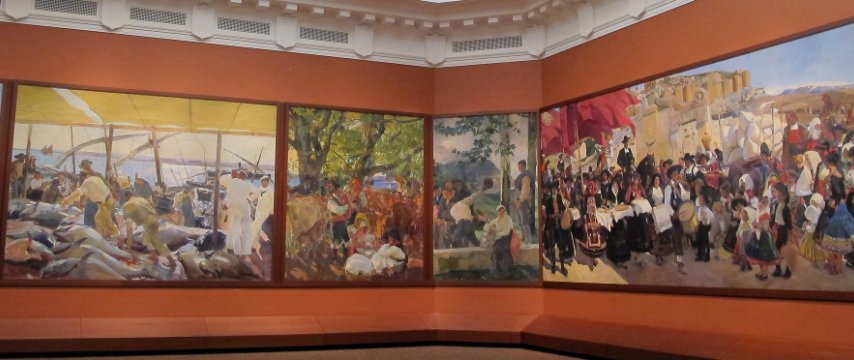
Photo: Sailko via Wikimedia Commons (CC BY-SA 3.0)
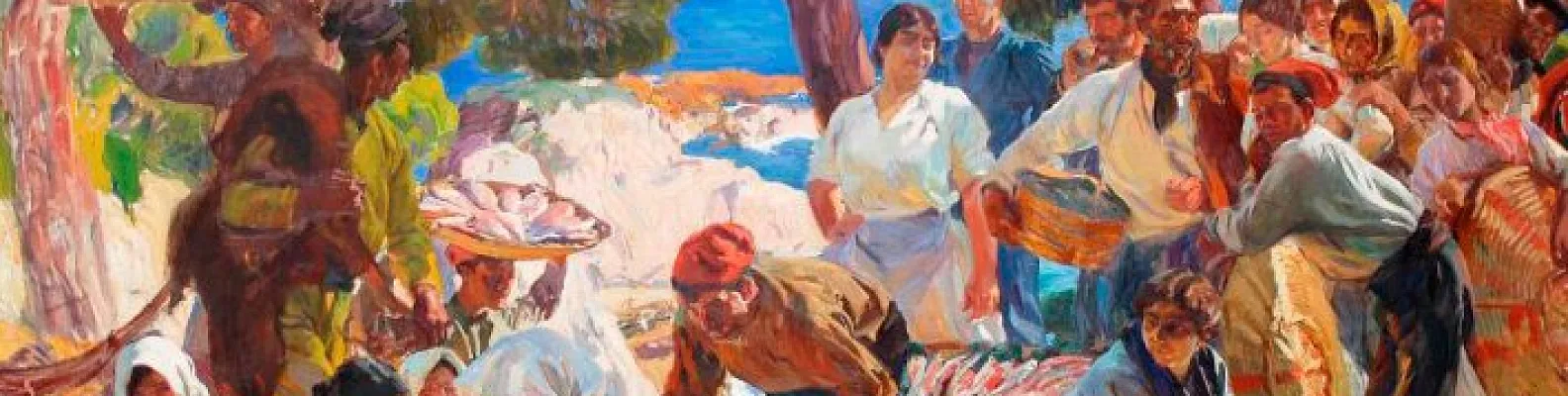
Among the fourteen panels that make up the monumental art series "Visión de España" (Vision of Spain), the one dedicated to Catalonia, titled "Cataluña. El pescado" (Catalonia. The Fish), a 351 x 485 cm mural located at the Hispanic Society of America in New York, stands out for its dynamism. This work, an oil on canvas painted in the autumn of 1915, is a key piece that summarizes the artist's technical mastery: the reflections on the white clothing of the women and the shine of the freshly caught fish transport us directly to the Catalan coast.
To bring this great mural to life, in September 1915 Sorolla painted directly on-site a 100 x 70 cm painting titled "Costa de Santa Cristina, Lloret de Mar" (Coast of Santa Cristina, Lloret de Mar). This valuable work, which is preserved today in the Sorolla Museum in Madrid, served as the definitive preparatory study to capture the light and landscape that he would later immortalize in the large panel in New York.
However, for decades, the exact spot that served as the backdrop for this work was a genuine mystery for art historians. The enigma was solved when it was confirmed that the location portrayed was the beautiful natural environment shared by Santa Cristina beach and the adjacent Cala Treumal beach, in Lloret de Mar.
The confirmation came thanks to the painter's personal correspondence. In a letter addressed to his wife, Sorolla described this corner of the Selva region with fascination: "Santa Cristina is a marvel. Great pine trees on the hill with bright-coloured rocks, over a marvellous sea of blue and green." This testimony forever linked one of history's most prominent painters with this enclave, allowing today's visitors to contemplate the landscape through the eyes of the master.
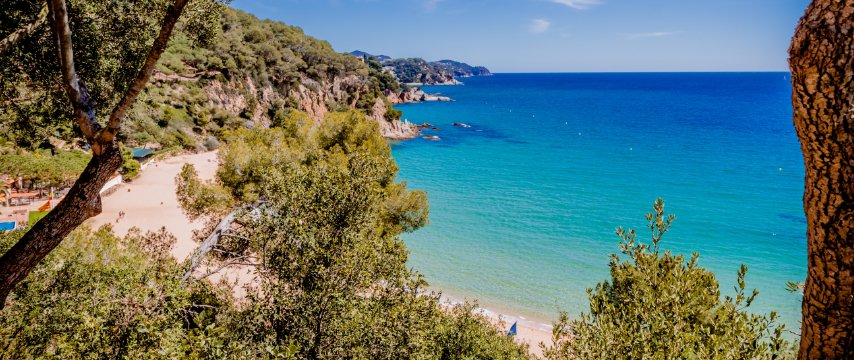
If you want to visit the real setting that captivated the artist, you should know that Santa Cristina beach still preserves the very same essence that made Sorolla fall in love more than a century ago. Before descending towards the coast, you will find a mosaic with his famous quote, a tribute that links this corner to his artistic legacy. This enclave is, without a doubt, one of the most outstanding gems among the beaches and coves of Lloret de Mar, where crystal-clear waters blend with the vegetation, offering spectacular views that define the essence of the Costa Brava.
Located ten minutes by car or bus from the centre of Lloret de Mar, both Santa Cristina beach and the neighbouring Cala Treumal beach are accessible via a descending path of medium difficulty. It is important to keep this detail in mind, as access can be difficult for people with reduced mobility. For greater convenience, there is a paid parking lot nearby. The historic Hermitage of Santa Cristina, located on the hill rising above the beach, is a viewpoint with sea views.
Both beaches are connected, allowing you to cross from one to the other by walking along the sand. Santa Cristina beach, with its 450 meters in length, is the wider space, while Cala Treumal beach offers a more intimate and wilder atmosphere, surrounded by vegetation. During the bathing season, from June 15 to September 15, both have essential services such as lifeguards, showers with foot washers, and beach bars (chiringuitos) to enjoy a refreshment. Since natural shade areas are scarce, it is recommended to go well-equipped. With the possibility of renting sun loungers, umbrellas, and recreational equipment, this environment is the perfect setting to enjoy the coast of Lloret de Mar.
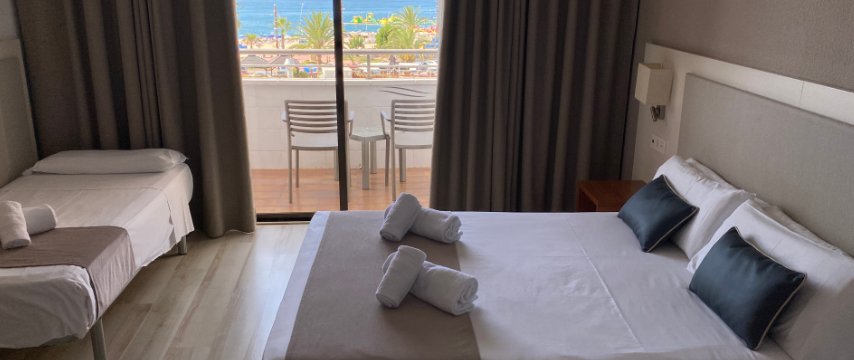
If you want to experience a unique holiday enjoying the beaches and coves of Lloret de Mar, Rosamar Hotels is your perfect accommodation for an unforgettable stay.
We offer five hotels perfectly adapted to every type of traveller. If you are traveling as a family, Hotel Rosamar Garden Resort, Hotel Rosamar & Spa, and Hotel Rosamar Maritim guarantee fun, comfort, and services designed for all ages.
On the other hand, if you are looking for a relaxing and disconnecting getaway, Hotel Rosamar Es Blau Adults Only +21 and Hotel Rosamar Maxim Adults Only +21 are the perfect option for adults seeking absolute tranquillity.
Book at Rosamar Hotels and discover this natural paradise on the Costa Brava!
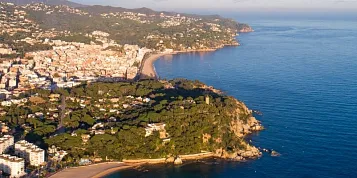
It's time to take the swimwear and... go to the beach! The season begins with days of bright sun, high temperatures, snorkeling expeditions to crystalline coves, spend the afternoons making sun castles with children...
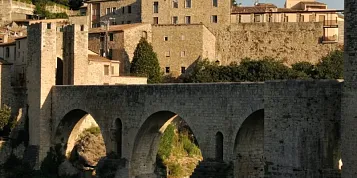
Catalonia is a land full of charming villages: castles, medieval bridges, narrow streets, houses made of stone, and beautiful mountains views.
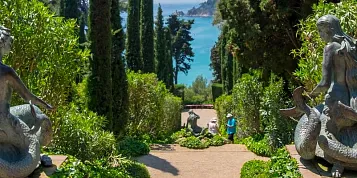
Lloret de Mar is a beautiful town located at the southern end of the Costa Brava. Its privileged location allows you to enjoy extensive beaches, hidden coves with crystal-clear water and beautiful buildings, the result of the Indian past and its modernist legacy.

On the Costa Brava you can find spectacular medieval castles from the time when the lands of Girona were the border between the Arab and Christian worlds. Some of them have remained in runes, but others still retain all their splendor. Keep reading and discover them in our post!

The botanical gardens are one of the most romantic places on the Costa Brava. The coastal landscape integrates with the picturesque garden landscape and the pleasant sound of the sea accompanies that of the leaves in the wind. Discover three spectacular gardens on the Costa Brava, taking advantage of the approaching European Day of Historic Gardens on April 26.
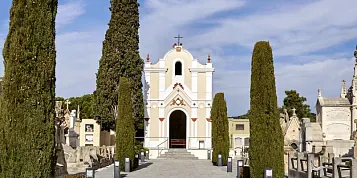
The modernist cemetery of Lloret de Mar is a clear example of the importance that funerary art had during the 19th century in Catalonia. Built in 1892 by the architect Joaquim Artau i Fàbregas thanks to the patronage of the town's Indians, it has authentic jewels of modernist art with countless details associated with funeral symbols.

On July 24th is celebrated the summer festival in Lloret de Mar, in honour of the city's patron saint, Santa Cristina. During this day, different events are held, among which the procession to the Santa Cristina Hermitage, the S'Amorra Amorra regatta or the traditional dance in the Plaza de la Vila (“Ball de Plaça”) stand out.