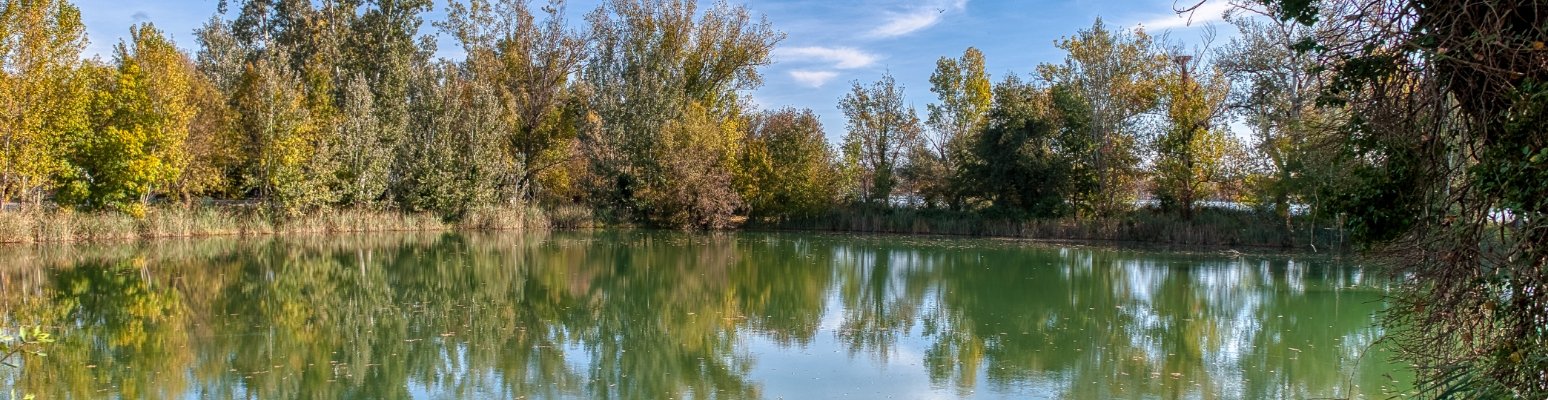
The Estany de Banyoles (or “Lake of Banyoles” in English) is one of the most impressive natural areas in Catalonia and an essential getaway for those seeking a nature-filled holiday with outdoor activities near the Costa Brava. Its karstic origin, rich biodiversity, and beautiful surroundings make it a destination to enjoy all year round. Discover what to see and do in this spectacular setting in the Pla de l'Estany region, Girona.
The Estany de Banyoles Protected Natural Area is the largest natural lake in Catalonia and is one of the most exceptional natural spaces in the province of Girona. Located at an altitude of 173 meters, this spot separates the Empordà plain from the Garrotxa mountains. It boasts impressive dimensions: a length of 2.1 km and an average depth of 15 meters, reaching 40 meters at its deepest point.
Its formation is the result of a unique hydrological process: water flows underground from the Alta Garrotxa, 20 kilometers away, on a journey that can take up to eleven months before emerging into the lake through thirteen upwelling points. This geological phenomenon has created a basin unique to the Iberian Peninsula, consisting of the main lake and several smaller ponds such as the Vilar, the Cisó, or the Clot d'Espolla.
Furthermore, the system has led to the formation of travertine (locally known as "pedra de Banyoles"), a limestone rock formed by the lime in the water. This stone is not only abundant in the natural environment but also defines the architecture of the buildings and streets in the city center.
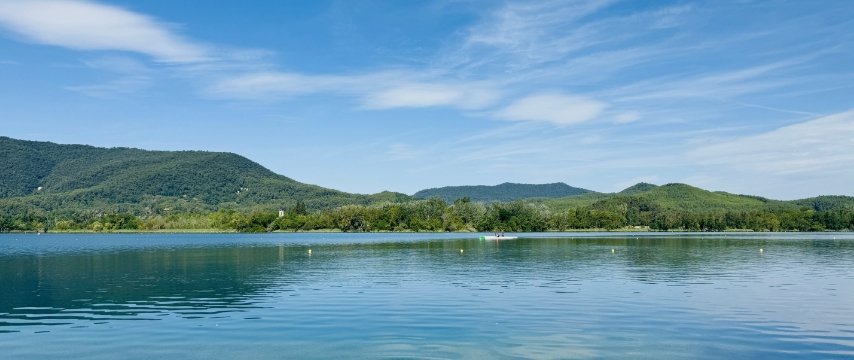
The diversity of environments around the Estany de Banyoles allows a wide variety of species to coexist. The landscape is dominated by riverside vegetation, featuring willows, poplars, and the iconic water lilies that dot the surface. Regarding fauna, the lake is a key spot for observing aquatic birds such as mallards, moorhens, or kingfishers, as well as mammals like otters.
However, its true biological wealth is also found underwater. The zooplankton includes species unique to Catalonia, most notably the Triops cancriformis crustacean, considered an authentic "living fossil." The system also stands out for its variety of freshwater bivalves (Unio sp.), amphipods (Gammarus sp.), and decapods (Atyaephyra desmaresti). This biological foundation supports a very diverse fish population, including barbel, chub, tench, pike, and eels.
The Estany de Banyoles is a perfect destination for activities throughout the year. One of the most recommended experiences is the lakeside loop, one of the best itineraries for discovering the landscape either on foot or by bicycle via a circular path of approximately 6.5 kilometers.
The environment is also ideal for sports activities. Rowing has a long tradition here, as the lake was a sub-venue for the Barcelona 1992 Olympic Games. Visitors can also enjoy canoeing, kayaking, or even Dragon Boat racing (a fun activity perfect for group activities). For those seeking a greater challenge, the lake features a marked Via Brava for open-water swimming, as well as designated areas for sport fishing.
For a more relaxed experience on the water, you can rent rowing boats or take a trip on the "Tirona," an eco-friendly 15-meter electric catamaran with a capacity for 80 people.
On the other hand, a stroll along the eastern shore, known as the front de l'Estany, is ideal for enjoying the surroundings calmly through its viewpoints, rest areas, and bird-watching spots. During the summer months, the lake also has authorized swimming spots, such as the Caseta de Fusta or the Banys Vells.
The Estany de Banyoles is renowned not only for its natural value but also for the cultural richness surrounding it. One of its greatest treasures is La Draga, a Neolithic archaeological site dating back 7,200 years. It is the only lakeside settlement of its kind on the peninsula. Its submerged section has exceptionally preserved organic materials such as wood and plant fibers, which are fundamental to understanding the lives of the first inhabitants of the region.
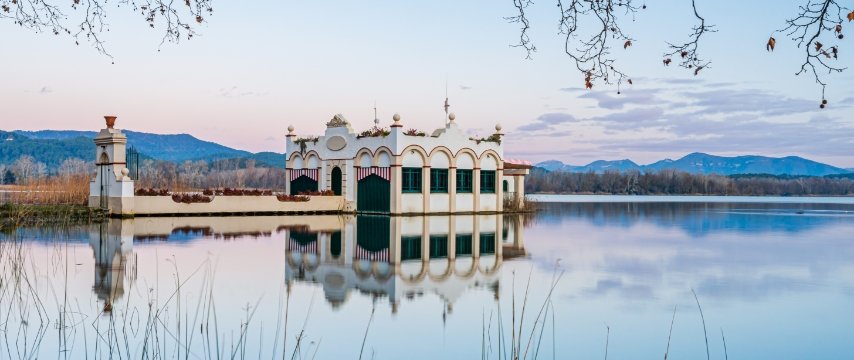
Added to this legacy are the pesqueres, twenty small structures built over the water between 1818 and 1931. Originally linked to fishing, they became recreational spaces for the bourgeoisie and are now the most recognizable heritage symbol of Banyoles. Near the lake, it is also worth visiting the Romanesque church of Santa Maria de Porqueres or completing your cultural tour at the Darder Museum, the Regional Archaeological Museum, or the Banyoles Art Center, which houses the prestigious Jordi Gimferrer collection featuring works by artists such as Dalí, Picasso, and Miró.
As a more popular contrast, the lake also preserves its legendary side thanks to the well-known story of the Monster of Banyoles, a traditional tale that is part of the local imagination.
To discover the Estany de Banyoles and the most emblematic landscapes of the province of Girona, Lloret de Mar is the ideal starting point. Rosamar Hotels offers five hotels for a comfortable stay on the Costa Brava.
If you are traveling as a family, Hotel Rosamar Garden Resort, Hotel Rosamar & Spa, and Hotel Rosamar Maritim have facilities and services designed for all ages.
If you are looking for a child-free holiday, Hotel Rosamar Es Blau Adults Only +21 and Hotel Rosamar Maxim Adults Only +21 are ideal for relaxing after a day of nature and excursions.
Book your stay with Rosamar Hotels and come discover this spectacular natural setting in the province of Girona!

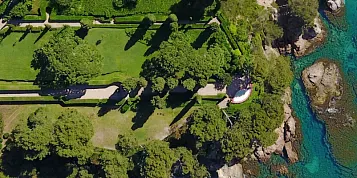
Now that spring is approaching, come and discover the magic of Santa Clotilde Gardens in Lloret de Mar in their maximum splendor. An oasis of natural beauty and serenity in the heart of the Costa Brava. Discover them!
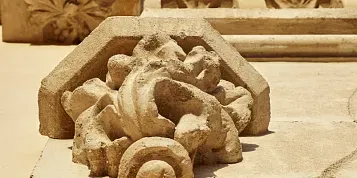
Do you want to know how the Iberians lived in Lloret de Mar? You can do it at Can Saragossa, an old farmhouse that houses permanent exhibitions on how the Iberians lived in the municipality. Discover it!

Rosamar Hotels, a world with endless activities for the whole family, where you can enjoy the best services and spectacular facilities during your family holidays in Lloret de Mar.
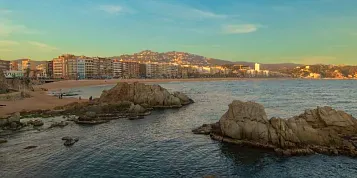
If you love nature, hiking and spectacular views, the Coastal Path in Lloret de Mar is an experience you can't miss. This iconic coastal path on the Costa Brava invites you to explore stunning landscapes while you delve into the history and natural beauty of the region.
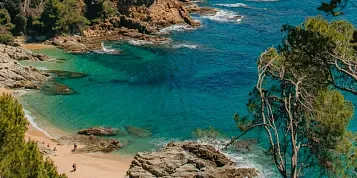
Sa Boadella beach, in Lloret de Mar, is one of the best beaches on the Costa Brava and also one of the most pristine. Its natural setting, with crystal-clear waters, golden sand, and a rocky landscape surrounded by pine forests, make it a true Mediterranean paradise. The beach was recently chosen as one of the best beaches in Spain by Condé Nast Traveller magazine. Discover it!
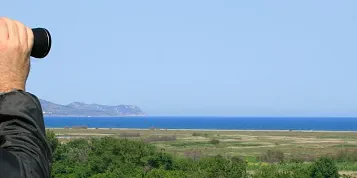
The Aiguamolls de l'Empordà are one of the most important wetlands in Catalonia and a true paradise for those looking to enjoy nature on the Costa Brava. Located between the mouths of the Fluvià and Muga rivers, this natural area brings together lagoons, marshes and canals that host a rich biodiversity. In this article, we explain why it is a must-visit destination.